
Our second mortgage calculator works out what a second charge would actually cost you: the monthly payment, the total you would repay, and how much equity you would have left in your home once it is in place.
Put your figures in and the numbers appear. You are not asked for anything first.
Think carefully before securing other debts against your home. Your home may be repossessed if you do not keep up repayments on a mortgage or any other debt secured on it.
Your figures
Put your figures in and the numbers appear. You are not asked for anything first.
We email the PDF to you. Your results stay on screen.
Where shall we send it?
We will email you a link to your PDF, and one of our second charge specialists will take a look at your figures.
We will only use these details to send you your figures and to talk to you about the borrowing. Clever Lending is authorised and regulated by the Financial Conduct Authority.
We have emailed a link to your figures.
It should arrive within a minute or two. If you cannot see it, have a look in your spam folder.
For illustration only. Figures are estimates based on what you have entered and are not a quote, an offer of finance or advice. Your rate depends on the lender, the valuation, your credit profile and your circumstances. Clever Lending is authorised and regulated by the Financial Conduct Authority (FRN 795789).
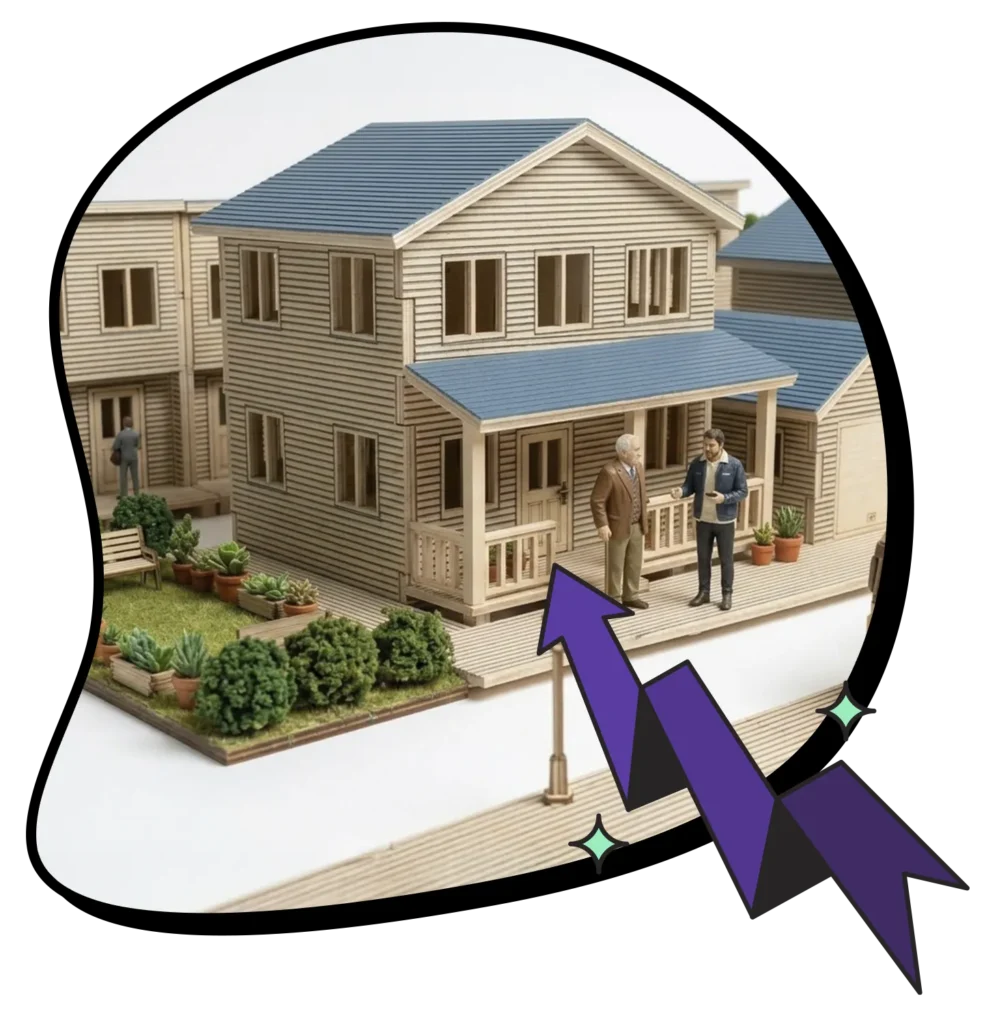
A second mortgage, also called a second charge mortgage or a secured loan, is borrowing taken out against a property you already own and already have a mortgage on. Your existing lender keeps the first charge. The new lender takes a second charge, which means if the property were ever sold, the first lender is paid first and the second lender is paid from what is left.
Worth clearing up straight away, because the phrase gets used two ways. A second mortgage in this sense is extra borrowing on the home you already own. It is not a mortgage to buy a second property, which is a second home mortgage or a buy to let and works quite differently. This page is about the first one.
Second charges are regulated in the same way as first charge mortgages, so you get the same protections and the same affordability checks, and a written illustration before you commit to anything.
A second mortgage sits behind your existing mortgage rather than replacing it, so your current rate stays exactly as it is. For a lot of people that is the whole point, particularly if you are on a rate you would be sorry to lose.
Lenders look at the total borrowing secured on the property, your existing mortgage plus the new loan, as a percentage of the value. That is your combined loan to value.
| Combined loan to value | Typical position |
|---|---|
| Up to 65% | The widest choice of lenders and the sharpest pricing |
| 65 to 75% | Still a strong market, most lenders comfortable here |
| 75 to 85% | Fewer lenders, pricing steps up |
| 85 to 95% | A small specialist market, expect a noticeably higher rate |
Say your home is worth £400,000 and you owe £180,000. At 75 per cent combined you could look at borrowing up to around £120,000. At 85 per cent, around £160,000, but at a higher cost.
Affordability then applies on top. The lender has to be satisfied you can service both the first mortgage and the new one, so income, existing commitments and credit history all feed in. Adverse credit does not rule you out on a second charge the way it often would on a high street remortgage, which is one of the reasons this market exists.
Three ways to raise money against a home you already own, and the right one depends mostly on the rate you are already on.
| Consideration | Second charge mortgage | Remortgage | Further advance |
|---|---|---|---|
| Your existing rate | Untouched | Replaced | Untouched |
| Early repayment charge on your current deal | Avoided | Often payable | Avoided |
| Who lends | A new, separate lender | A new lender or your current one | Your current lender only |
| Speed | Usually faster | Slowest of the three | Depends on the lender |
| Adverse credit | Most flexible | Least flexible | Depends on the lender |
| Rate | Higher than a first charge | Usually the lowest | Usually competitive |
If you are sitting on a low fixed rate with years left to run, a remortgage can cost you far more in lost rate and early repayment charges than a second charge costs in interest. If your current deal is nearly up and your credit is clean, a remortgage is often cheaper. It is worth doing the sums both ways before you decide, and that is a conversation rather than a calculator.
| Cost | Typical | Notes |
|---|---|---|
| Interest rate | Varies widely | Driven by combined LTV, credit profile and loan size, so we quote live rather than publish a figure that dates |
| Arrangement or completion fee | Often 1 to 3% | Usually added to the loan rather than paid up front |
| Valuation | £0 to a few hundred | Many lenders use an automated valuation on straightforward cases |
| Legal fees | Often covered | A lot of second charge lenders include legals |
| Broker fee | Agreed in writing | Ours is agreed up front, before you commit to anything |
| Early repayment charge | Varies | Check this if you might repay early or remortgage later |
The bigger cost is usually the term. Borrowing £50,000 over 25 years rather than 10 gives you a much lower monthly payment but a far larger total. The calculator shows both numbers side by side for exactly that reason.

Home improvements are the most common, particularly extensions and loft conversions where the work adds more to the value than it costs to borrow. Debt consolidation is the next, though it needs care: moving unsecured debt onto your home lowers the monthly cost but secures it against the roof over your head and usually stretches it over a longer term.
After that it varies. We see deposits for a buy to let or a second property, tax bills, school and university fees, divorce settlements where one party is buying the other out, and business owners who would rather use the equity in their home than take on commercial borrowing.
Five figures and the numbers appear. Here is what each one means.
| Field | What to enter |
|---|---|
| Property value | A realistic figure. A local agent will give you a view for free |
| Existing mortgage balance | The current balance, not what you originally borrowed |
| Amount you want to borrow | What you actually need, not the maximum available |
| Term | Longer means a lower monthly payment and a much higher total cost |
| Interest rate | A working figure if you do not have a quote. Ask us for live pricing |
Then look at the total repayable, not just the monthly payment. The monthly figure is what you can afford. The total is what it costs.

A lender is looking at the equity in your property, whether you can comfortably afford both loans, and what the money is actually for. That last one surprises people.
Equity is the straightforward part, and the calculator shows you where you sit. On affordability, the lender stress tests both the first and second charge against your income and outgoings rather than just the new borrowing. As for purpose, home improvements that add value get a warm reception. Consolidation is perfectly acceptable too, though the lender will want to understand the full picture rather than see a rolling pattern of refinancing.
A valuation is always required, though on straightforward cases it is often an automated one rather than a physical visit, which keeps things moving.
We are a specialist property finance brokerage, authorised and regulated by the Financial Conduct Authority. Second charge lending sits alongside the bridging finance and complex income mortgages we arrange every day, and we structure regulated and unregulated lending on a first, second or cross-charge basis.
The second charge market is not one you can shop properly on the high street. Lenders vary enormously on maximum combined LTV, how they treat adverse credit, whether they will lend on your property type and how quickly they move. We know which ones suit which cases.
Send us the outline and we will come back within 24 business hours with a clear route forward. There are no fees payable until we have found you a solution, and you will always speak to an adviser rather than a triage team.
If the borrowing is short term and you plan to repay it within months rather than years, bridging finance may suit better. If the money is for a rental property, look at buy to let mortgages. You can see everything we arrange on our borrower finance options page.
Send us the outline and we will come back within 24 business hours with a clear route forward. No fees payable until we have found you a solution, and you will always speak to an adviser rather than a triage team.
It depends on the equity in your property and your affordability. Most lenders will go to around 75 to 85 per cent of the value across both your existing mortgage and the new loan, with a smaller specialist market going higher. On a £400,000 home with £180,000 outstanding, 75 per cent combined means around £120,000 available.
Yes. Second mortgage, second charge mortgage and secured loan all describe the same thing: borrowing secured against a property that already has a mortgage on it. The terms are used interchangeably across the market, which causes a lot of confusion.
They sit above first charge rates, because the lender is second in line if the property is ever sold. Pricing moves with your combined loan to value, your credit profile and the size of the loan, and it changes month to month. We give you live pricing for your case rather than a figure that dates on the page.
It depends on the rate you are already on. If you have a low fixed rate with years to run, remortgaging can cost you more in lost rate and early repayment charges than a second charge costs in interest. If your deal is nearly up and your credit is clean, remortgaging is often cheaper. Worth running both.
Often yes. The second charge market is considerably more flexible on adverse credit than high street remortgaging, because the lender is secured against real equity. Defaults, CCJs and missed payments do not automatically rule you out, though they will affect the rate you are offered.
You can, and it is one of the most common reasons people take one. It usually lowers the monthly cost, but it turns unsecured debt into debt secured on your home and often spreads it over a longer term, so the total you repay can be much higher. It needs proper advice rather than a calculator.
Yes, and it is the reason lenders like most. Work that adds more value than it costs to borrow, such as an extension or a loft conversion, tends to get a warm reception, particularly if you are on a good first charge rate you do not want to disturb.
Usually faster than a remortgage. Straightforward cases can complete in a few weeks, helped by the fact that many second charge lenders use automated valuations and cover the legal work. Timing depends mostly on how quickly documents come back.
Yes. Where a property is jointly owned, all owners normally have to be party to the loan, because the lender is taking a charge over the whole property. Both incomes can usually be used for affordability.
They sound alike but are entirely different. A second mortgage is extra borrowing against the home you already own. A second home mortgage is finance to buy another property, whether a holiday home or somewhere for family. If it is the second one you are after, our buy to let and specialist mortgage options are the better starting point.
WhatsApp us
Email us directly with your enquiry by clicking here or using our email [email protected].