For Borrowers

commercial mortgage brokers

A commercial mortgage lets you buy or refinance business premises and commercial investments at up to 75% LTV, over terms up to 25 years, with rates in 2026 typically starting in the mid-5% range depending on the property and your accounts. Shops, offices, warehouses and mixed-use are all covered.

Every business has a different story, which is why our team  of commercial mortgage brokers takes the time to understand yours. 

If you are buying business premises or investing in commercial property, we help secure commercial mortgages for shops, offices, warehouses and mixed-use properties. 

By working with lenders that aren’t available to every broker, we have access to the most competitive rates on the market and know how to get you the best possible terms. We’re clever like that.
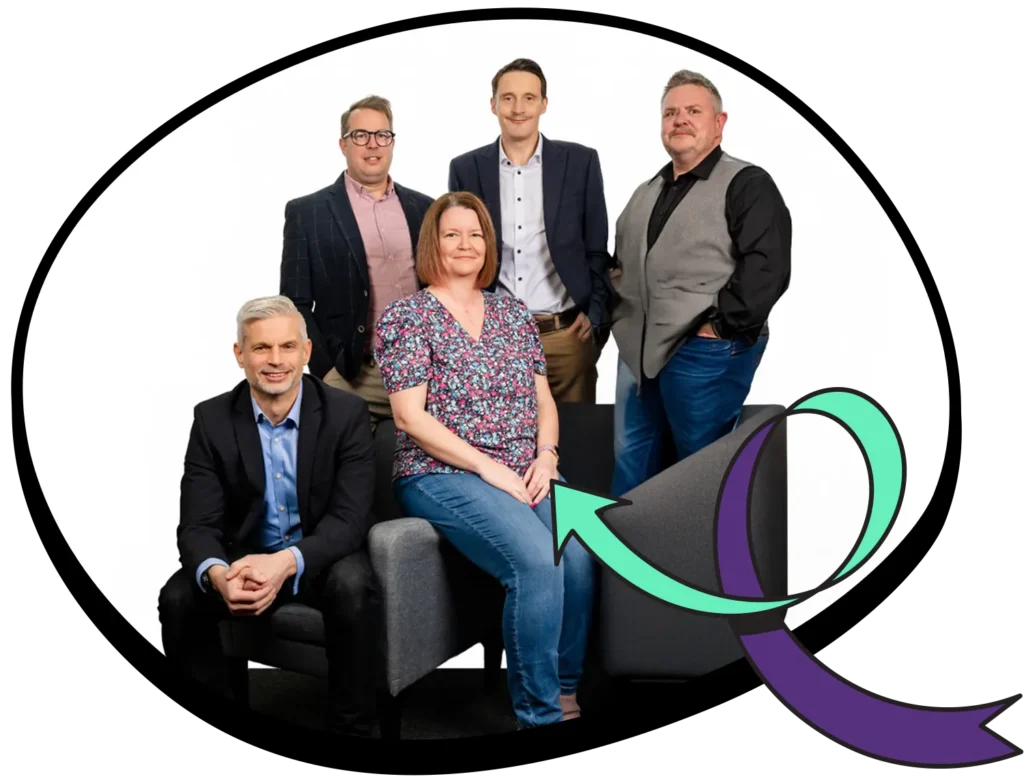
What Makes Us So Clever?

We don’t just “find rates.” We guide you through the entire process, liaising with all parties and pushing things forward. So, whether you are buying your first warehouse or expanding a retail portfolio, we’re clever about the details, so you don’t have to be.

Commercial Mortgages Options

Our Commercial Mortgage Broker Process

Typical timing: Straightforward commercial mortgage cases usually complete within 10-14 weeks, depending on valuation, legals and lease review.

We’ll always give you realistic dates at the start and update you as soon as anything changes.

Same-Day Sense Check

Send us a quick enquiry - including the property value, the amount you wish to borrow, your timescale, and any quirks- and we will come back within 24 business hours with a clear plan and the likely structure of your loan.

DIP → Valuation → Offer

Once this is approved, we will request a signed Decision in Principle (DIP), then instruct a property valuation and set out any conditions in clear terms.

Legals & Completion

We keep the legal process moving and update you at every stage. If, for whatever reason, a date shifts, you’ll hear it from us first (along with a new date).

Commercial Mortgage Case Studies

Warehouse for a growing e-commerce brand

~75% LTV over 20 years; covenants matched to seasonal trading; completed in 6 weeks.

Parade refinance

~70% LTV; DSCR built from staggered leases; capital released for the next purchase.

Shop with uppers

~75% LTV; retail and residential income assessed separately; title tidy-up fixed pre-offer.

(Anonymised; figures indicative.)

Commercial Mortgage Broker FAQs

Commercial mortgages generally fall into two main categories:


  • Owner-occupier mortgages
    Used to buy property that your business will trade from, such as shops, offices, warehouses or other commercial premises.
  • Commercial investment mortgages
    Used to purchase property that you intend to let out to tenants as an investment.

Taking out a commercial mortgage can offer several advantages:


  • Interest payments may be tax-deductible (subject to your accountant’s advice)
  • If the property increases in value, your equity may grow over time
  • Investment properties can generate rental income
  • You are investing in an asset rather than paying rent to a landlord

Commercial mortgages work differently to home mortgages:


  • Rates are usually variable rather than fixed
  • Interest rates are typically higher than residential mortgages, as commercial lending is considered higher risk
  • Rates are often more competitive than unsecured business loans, as the loan is secured against property

A commercial mortgage is secured by a legal charge over the property and can be used for a range of purposes, including:


  • Buying business premises
  • Purchasing commercial investment property
  • Refurbishing owner-occupied premises
  • Supporting business growth, such as purchasing equipment or machinery
  • In some cases, funding property development projects

Most commercial mortgages are offered on a variable rate, often quoted as a margin above the Bank of England base rate.

Fixed-rate options are available in some cases, particularly for smaller loan amounts, but availability depends on the lender and the risk profile of the application.

Rates are assessed on a case-by-case basis, taking into account the property, the business, and how the loan fits within the lender’s criteria.

Yes, a deposit is required for most commercial mortgages.


  • Deposits are typically higher than residential mortgages
  • Most lenders require between 20% and 40%, depending on the property type, business profile and overall risk


The exact deposit required will vary by lender and circumstance.

Most UK commercial lenders ask for a deposit of 25 to 40%, meaning loan-to-values of 60 to 75%. Owner-occupier deals on strong trading businesses can sometimes stretch towards 75 to 80% LTV. Pure investment cases usually sit at 65 to 75%. Clever Lending matches the lender to your deposit and trading position so you don't waste time on applications that fall outside the LTV cap.
Commercial mortgage rates are usually quoted as a margin above the Bank of England base rate or SONIA, with the all-in pay rate typically landing between 6% and 9%. Pricing depends on LTV, covenant strength, sector, lease length and the borrower's experience. Fixed and variable products are both available, and we'll compare them against your hold period before recommending a route.
A typical UK commercial mortgage takes 10 to 14 weeks from application to completion, driven mostly by valuation lead times, legal due diligence, and lease or tenant review. Cleaner cases on simple securities can complete in 8 to 10 weeks. Complex multi-let or development cases can stretch to 16 weeks or more. We front-load document packaging so the underwriter doesn't bounce the file partway through.
An owner-occupied commercial mortgage funds premises the business will trade from, with affordability assessed against the business's EBITDA. A commercial investment mortgage funds a property let to a third-party tenant, with affordability assessed on rental income against debt service (DSCR). Lender panels, LTVs and rates differ between the two routes, so the right product depends on the underlying use.
Yes. Most UK commercial mortgages are arranged in the name of a trading limited company, a holding company or an SPV. Lenders will look at company accounts, director guarantees and the underlying trading or rental position. Newly-incorporated SPVs are routinely accepted, provided the directors have a track record and the deal stacks on debt service.
Yes. Semi-commercial and mixed-use properties such as a shop with flats above are well served by the specialist commercial lender panel, with LTVs commonly up to 75%. Rates often sit between residential and pure commercial pricing, depending on the residential to commercial split, tenant strength and lease lengths. We know which lenders price mixed-use most aggressively.
Commercial mortgage terms typically run from 5 to 25 years. Owner-occupier deals often line up with the business plan or trading lease. Investment deals are usually 15 to 25 years on capital-and-interest or interest-only. Some lenders offer interest-only across the full term where loan-to-value remains conservative, which can be useful for managing portfolio cash flow.
Yes. Bridge-to-term is one of the most common commercial finance journeys. The bridge funds acquisition, often at speed or on an unmortgageable property, and then a commercial mortgage refinances onto longer-term debt once the property is income-producing, refurbished or has trading history. We plan both stages from day one so the take-out is teed up well before the bridge runs out.
Yes, but new businesses face tighter underwriting. Lenders usually want a detailed business plan with cash-flow projections, evidence of director experience, and a meaningful deposit (often 30% or more). Sectors with predictable income such as care, healthcare and professional services fare better than discretionary retail or hospitality. We match the case to lenders with active start-up appetite rather than to banks that refuse on a blanket basis.

Speak to a Clever Commercial Mortgage Broker Today

Send us a quick enquiry, and we’ll come back within 24 business hours with a realistic route forward. 

There are no fees payable until we have found you a solution, and you will always speak to an advisor, not to a triage team passing you on. We believe in speaking to an expert from the start.

Request a Callback

Email us directly with your enquiry by clicking here or using our email [email protected].